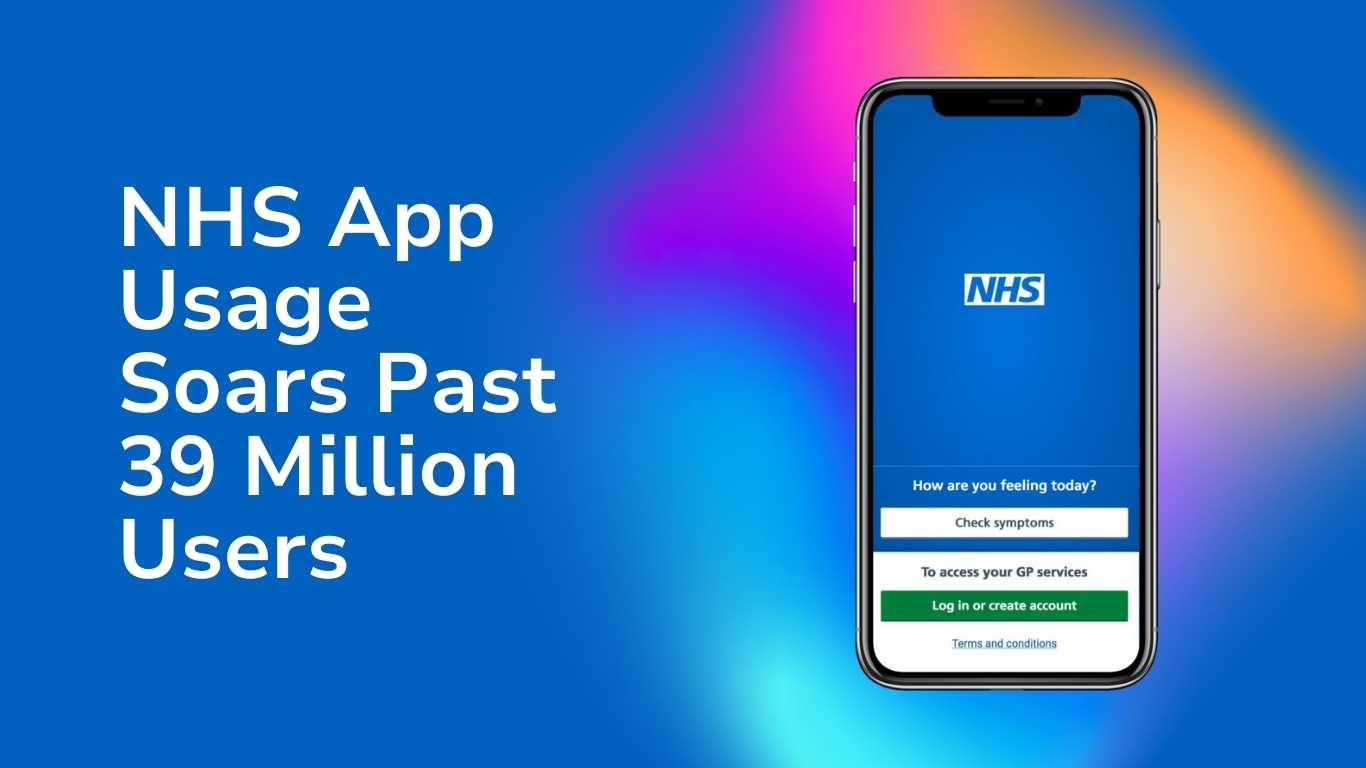
THE NHS App has crossed a major threshold, signalling a shift in how patients across England are accessing care.
According to NHS England’s latest year-end update, the NHS App now boasts over 39 million registered users, marking a significant acceleration in digital health engagement. Over the last 12 months alone, patients submitted nearly 67.8 million repeat prescription requests through the app, and November 2025 saw a record 62.3 million logins, underscoring just how embedded the platform has become in daily care routines.
Perhaps most telling: on 25 December 2025, more than 300,000 people accessed the NHS App, whether to check prescriptions, view medical records, or manage appointments. Even during holidays, digital care is becoming the default.
A Digital Front Door at Scale
The NHS App has steadily evolved into a core channel for routine patient interaction. Its success reflects one of the central goals of the NHS’s 10-Year Health Plan, delivering digital-first care that is timely, convenient, and connected. With new features like the prescription status tracker, the platform is designed to shift more routine services online, reducing pressure on in-person services and enabling more self-directed patient management.
Dr Zubir Ahmed, the UK’s Health Innovation Minister, called the platform a demonstration of “how convenient it is to have the NHS in your pocket.” That phrase captures a wider shift in expectations around healthcare delivery—access must now match the mobile-first standard of other consumer services.
Why It Matters for Med4Nexus
The NHS App’s explosive growth marks more than just a user milestone; it’s a signal to digital health innovators and service providers. At over 39 million users, it represents a national infrastructure layer through which digital tools, remote services, and health information can reach the public at scale.
For Med4Nexus participants, this reinforces the strategic relevance of Digital & Data-Driven Healthcare. It highlights the importance of integration-ready solutions, whether clinical decision support, patient communication tools, or app-connected diagnostics that can plug into existing NHS pathways. The future of care is not just digital, it’s platform-based, user-driven, and increasingly patient-owned.

related posts

Artificial intelligence is increasingly being embedded into the operational fabric of the NHS, not as a standalone innovation, but as part of core digital infrastructure designed to improve productivity, efficiency [...]

Tuberculosis remains one of the most urgent global health challenges, particularly as antimicrobial resistance continues to rise. Traditional diagnostic approaches often struggle to deliver drug-resistance information fast enough to inform [...]

Off-the-Shelf Immune Cell Therapy Hunts Down Pancreatic Cancer in Breakthrough Study Scientists have developed an “off-the-shelf” cell therapy that can seek out and destroy aggressive tumour cells, showing remarkable success [...]